Dealing With Asphalt Cracks and Repairs During the Summer Summer heat in Massachusetts creates the perfect storm for asphalt issues, but it also presents the ideal opportunity for repairs. As temperatures soar and your driveway or parking lot expands under the intense sun, existing cracks widen and new ones form. However, experienced paving companies near me know that these same warm conditions create optimal circumstances for lasting asphalt repairs. Whether you’re managing a commercial parking lot in Springfield or maintaining your residential driveway in Worcester, understanding summer asphalt maintenance can save you thousands in premature replacement costs. This comprehensive guide reveals why professional contractors recommend summer for major repairs and how you can protect your investment during Massachusetts’ hottest months. Why Summer Is the Optimal Season for Asphalt Repairs Perfect Temperature Conditions for Material Adhesion Summer’s consistent warmth creates ideal conditions for asphalt repair materials. When searching for “asphalt repairs near me,” you’ll find that professional contractors prefer working in temperatures between 70-85°F because: Enhanced Material Flow: Hot weather allows crack sealers and patching compounds to flow smoothly into damaged areas, creating stronger bonds with existing asphalt. Faster Curing Times: Higher temperatures accelerate the curing process, reducing downtime for your driveway or parking lot. Better Compaction: Warm asphalt compacts more effectively, creating denser, more durable repairs that withstand Massachusetts winters. Preparation for Harsh New England Weather Smart property owners schedule asphalt driveway repairs near me during summer to prepare for autumn challenges: Debris Protection: Sealed cracks prevent leaves, twigs, and organic matter from infiltrating your pavement Water Barrier: Professional summer repairs create waterproof barriers before heavy autumn rains arrive Freeze-Thaw Prevention: Properly sealed asphalt resists water penetration that causes destructive freeze-thaw cycles Extended Working Hours and Weather Reliability Summer provides paving companies with consistent working conditions. Unlike spring’s unpredictable weather or fall’s shortened daylight, summer offers: Longer daylight hours for complex repairs Minimal weather-related project delays Optimal scheduling flexibility for property owners Common Summer Asphalt Problems Heat-Related Thermal Expansion Issues Massachusetts summers regularly reach 85-90°F, causing significant asphalt expansion. This thermal stress manifests as: Linear Cracking: Long, straight cracks that follow pavement edges or run parallel to traffic patterns. These typically appear in older asphalt surfaces (10+ years) where the binding agents have weathered.Alligator Cracking: Interconnected cracks resembling reptile skin, usually indicating structural failure beneath the surface. This requires immediate attention from parking lot repair near me specialists.Edge Deterioration: Pavement edges crumble and separate, particularly common in residential driveways without proper edge support. UV Damage and Surface Oxidation Intense summer sun breaks down asphalt binders through oxidation: Color Changes: Fresh black asphalt fades to gray or brown Surface Brittleness: Oxidized asphalt becomes prone to cracking and raveling Aggregate Exposure: Loose stones indicate binder failure requiring professional intervention Heavy Traffic Stress During Peak Season Summer brings increased traffic loads that stress Massachusetts pavement: Tourist Traffic: Cape Cod and Berkshire destinations see 300% traffic increases Construction Activity: Summer construction projects increase heavy truck traffic Event Parking: Summer festivals and gatherings concentrate vehicle loads in specific areas Warning Signs Requiring Immediate Professional Attention Property owners should contact Pavel Pavement when observing:Immediate Concerns: Cracks wider than ¼ inch Potholes of any size Standing water after rainfall Loose or missing asphalt chunks Progressive Issues: Multiple small cracks appearing simultaneously Oil stains that penetrate deeply into asphalt Uneven surfaces that create trip hazards Drainage problems causing water pooling Professional Step-by-Step Asphalt Crack Sealing and Repair Process Phase 1: Comprehensive Inspection and Assessment We begin every project with thorough evaluation: Surface Assessment: Trained technicians identify crack types, measure dimensions, and assess underlying structural integrity. They use specialized tools to determine if cracks indicate surface-level issues or deeper foundation problems. Drainage Evaluation: Proper water management prevents future damage. Professionals examine existing drainage patterns and identify areas where water infiltration could compromise repairs. Traffic Pattern Analysis: Understanding how vehicles use your pavement helps contractors predict stress points and recommend preventative measures. Phase 2: Proper Preparation and Cleaning Quality repairs depend on meticulous preparation: Crack Cleaning: High-pressure air systems remove debris, vegetation, and loose asphalt from cracks. This step ensures optimal adhesion between new materials and existing pavement. Surface Preparation: Professional-grade cleaning removes oil stains, dirt, and oxidized material that could interfere with repair materials. Edge Cutting: For larger cracks, contractors create clean, straight edges that provide better sealant adhesion and more attractive finished appearance. Phase 3: Professional Material Application Experienced contractors use commercial-grade materials unavailable to DIY enthusiasts: Hot-Applied Sealants: These materials remain flexible through temperature changes while providing waterproof barriers. Professional application requires specialized heating equipment and precise temperature control. Cold-Applied Solutions: For smaller cracks, high-quality cold sealants offer convenience with professional-grade performance when applied correctly. Patching Compounds: Full-depth repairs use hot-mix asphalt applied with commercial compaction equipment to ensure proper density and longevity. Phase 4: Quality Assurance and Curing Professional parking lot repair near me services include comprehensive quality control: Material Coverage Verification: Ensuring complete crack filling without overfill that could create trip hazards Adhesion Testing: Verifying proper bonding between new and existing materials Curing Monitoring: Professional contractors understand optimal curing times and provide guidance for traffic resumption The Professional Advantage: Why Hire Pavel Pavement Local Expertise and Massachusetts Climate Knowledge Pavel Pavement Maintenance understands these unique challenges:Seasonal Planning: Local contractors schedule repairs considering Massachusetts’ short construction season and plan projects around weather patterns.Material Selection: Experienced professionals choose repair materials specifically formulated for New England climate conditions, including extreme temperature variations and heavy precipitation.Regulatory Compliance: Professional contractors understand local building codes, environmental regulations, and permit requirements for commercial properties. Professional Equipment and Advanced Materials We use specialized equipment in our Asphalt Repairs:Precision Application Tools: Professional-grade crack sealing equipment ensures consistent material application and proper penetration depth.Commercial Compaction Equipment: Proper compaction requires heavy machinery that achieves optimal density for long-lasting repairs.Quality Materials: Contractors access commercial-grade sealants and patching materials with superior performance characteristics compared to retail products. Comprehensive Service and Long-Term Value Professional services extend beyond basic repairs:Preventative Maintenance Planning: Experienced contractors develop customized maintenance schedules that maximize pavement
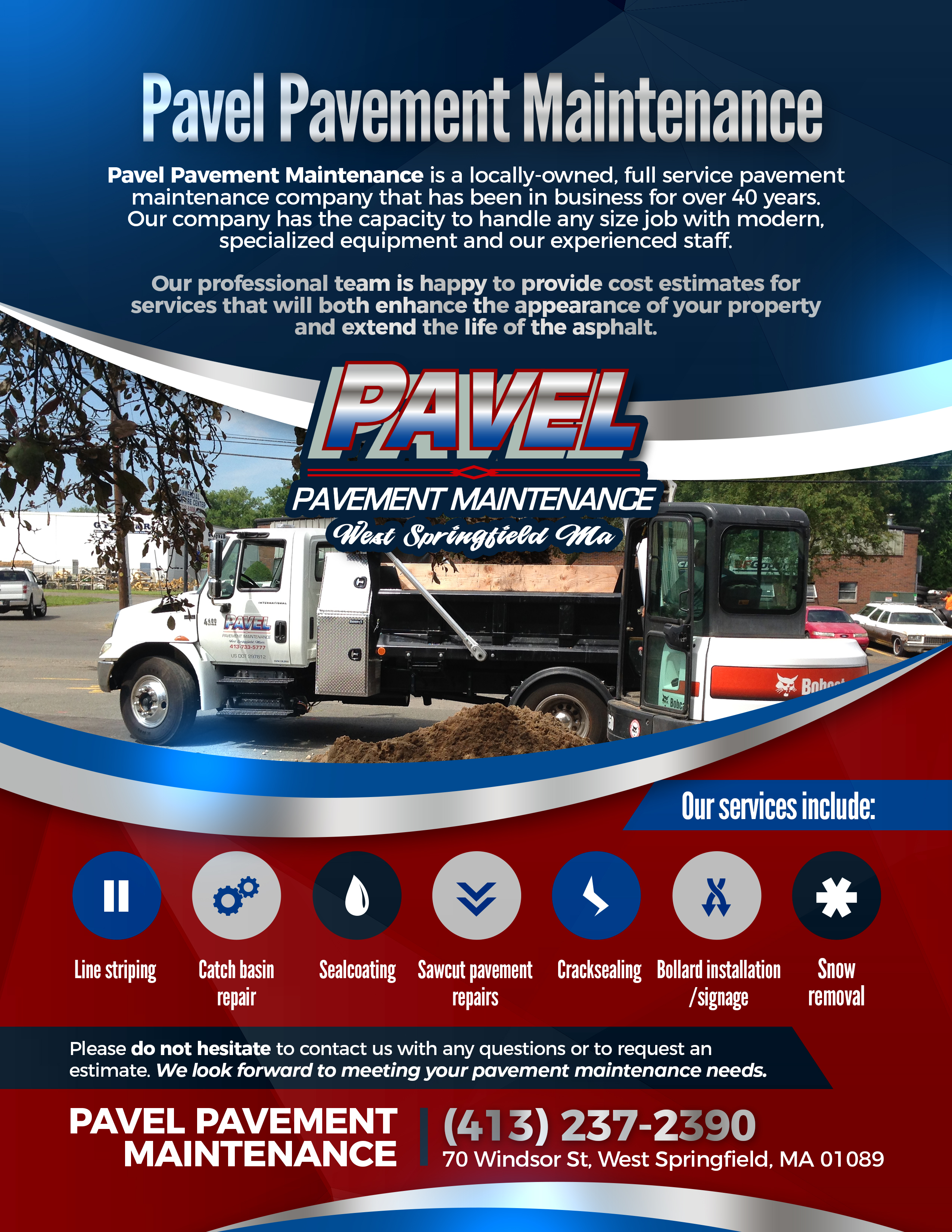
Flyer
Pavel Pavement Flyer